You step up to the squat rack, slide a couple of plates onto the barbell, and drop down into your first warm-up rep. Halfway down, your knees sound like a pristine bag of potato chips opening up, and a dull, familiar ache flares up in your lower back. You haven’t even touched your heavy working sets yet, but your body is already throwing up warning lights. It’s incredibly frustrating ’cause your mind wants to lift like you’re still 21, but your 30-year-old joints are flat-out refusing to cooperate.
Crossing into your 30s doesn’t mean your athletic life is over, and it absolutely doesn’t mean you’re built out of glass. It just means the margin for error with your lifting mechanics has officially shrunk to zero. When you were younger, your body could tolerate sloppy form, terrible posture, and zero warm-ups through sheer youthful resilience. Now, after a decade of sitting in office chairs, driving commutes, and dealing with adult stress, your structural baseline has changed completely.
If you try to force a sedentary body into heavy, high-intensity compound lifts without addressing these structural changes, you’re gonna end up on the sidelines. Preventing lower back and knee pain isn’t about avoiding heavy weights or sticking to boring cardio machines. It’s about understanding your new biomechanics, fixing your joint alignment, and training smarter than the college kids lifting next to you.
1. The Real Reason Your Back and Knees Hurt (The Desk Chair Hangover)
Most people blame the exercises themselves when their joints start screaming. They think squats ruin knees and deadlifts destroy backs. That is a total myth. The barbell is just a mirror—it exposes the structural flaws and muscular imbalances you accumulated during the 8 to 10 hours you spent sitting down before you even walked into the gym.
The Anterior Pelvic Tilt Trajectory
When you spend your day stuck in a chair, your hip flexors remain in a chronically shortened state. Over time, these tight tissues pull down on the front of your pelvis, tipping it forward into a position called Anterior Pelvic Tilt (APT). This mechanical fault completely deactivates your glutes and forces your lower back into hyper-extension. The second you un-rack a heavy weight with your pelvis tilted, your lumbar spine takes 100% of the shear force instead of your powerful hip musculature.
The Knee-Shear Connection
Your knee is a relatively simple hinge joint trapped between two highly complex structures: your hip and your ankle. If your ankles are stiff from wearing restrictive shoes and sitting all day, your range of motion (ROM) plummets. When you drop into a squat with zero ankle mobility, your heels lift, your shins can’t drift forward naturally, and your knees take a massive, unnatural amount of rotational shear stress. Your knee is forced to move in ways it wasn’t designed to, chewing up the patellar tendon and cartilage.
2. Lock Down Your Spine: Master the Art of the Brace
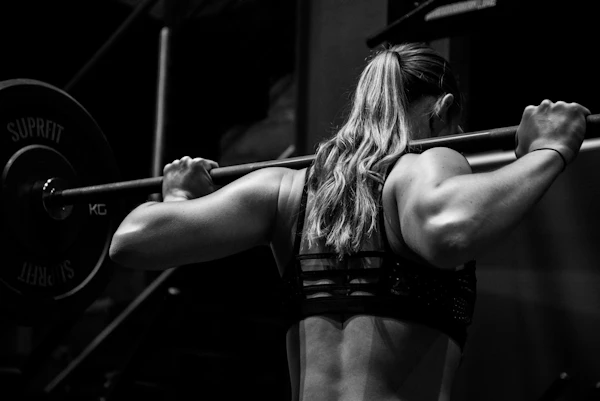
If you want to protect your lower back from heavy loads, you need to stop thinking about your “core” as a muscle group meant for sit-ups and crunches. Your core is a 360-degree pressure cylinder designed to prevent movement, not create it. To handle heavy compound lifting at 30+, you must master the mechanics of intra-abdominal pressure (IAP).
- Breathe Into Your Obliques: Don’t suck your stomach in when you lift. Instead, take a deep belly breath and drive your abdominal wall outward in all directions. Think about trying to expand your waistband against a lifting belt.
- Brace Like You’re Getting Punched: Once your belly is full of air, contract your abs as hard as you can. This locks your lumbar spine into a rigid, bulletproof cylinder, transferring the weight safely through your hips and legs.
- Pack Your Neck: Keep your spine neutral from your hips to your skull. Stop staring up at the ceiling when you squat or deadlift; look at a spot on the floor a few feet in front of you to keep your cervical spine in perfect alignment.
Disclaimer: This blueprint is built for general tightness and age-related mechanical adjustments. If you are experiencing sharp, shooting nerve pain down your legs, severe swelling in your joints, or suspected structural tears, do not attempt to train through it. Back off the weights immediately and consult a licensed physical therapist to get a proper clinical evaluation.
3. Save Your Knees: Ditch the Squishy Footwear and Un-lock Your Hips
Fixing your knees requires looking at the structural joints directly above and below the hinge. If your hips can’t pivot and your ankles are totally locked up, your knees end up absorbing 100% of the punishment. Sorting this mess out requires optimizing your physical foundation before anything else.
First, take a look at your feet. If you’re training in squishy, heavily cushioned running shoes, you are actively destroying your knee stability. Running shoes act like a mattress under your feet, causing your ankles to wobble and forcing your knees to constantly compensate for the unstable surface. Switch to a flat, hard-soled shoe like a Converse, a dedicated lifting shoe, or go barefoot if your gym allows it. This creates a rock-solid foundation that allows your nervous system to fire your glutes and hamstrings properly.
Next, you have to completely overhaul how you trigger the descent. Most lifters over 30 begin their squats by immediately shooting their knees forward, throwing massive sheer stress onto the patellar tendon under load. Instead, you need to master the hip hinge. Start your lower-body exercises by pushing your hips backward first, as if you’re trying to touch a wall behind you with your glutes. This simple mechanical shift transfers the weight away from your knee caps and loads it onto your posterior chain, which is built to handle massive resistance.
—Actionable Takeaway: The “Joint Armor” Pre-Workout Protocol
Do not walk into the gym and immediately jump under a barbell. Run through this hyper-targeted, 3-step protocol before your lower-body training days to wake up dormant muscle fibers and lubricate your joints.
The 30+ Lower Body Prep Routine
| Movement Drill | Target Parameters | The Biomechanical Purpose |
|---|---|---|
| 1. 3-Way Ankle Mobilization | 2 sets x 10 reps per side | Increases dorsiflexion so your knees don’t take the brunt of squat depth. |
| 2. Glute Bridges with 3-Sec Pause | 2 sets x 12 reps (Hold the top) | Fires up dormant glutes to pull your pelvis out of Anterior Pelvic Tilt. |
| 3. KB or DB Goblet Box Squat | 3 sets x 8 reps (Light weight) | Teaches the nervous system to hinge at the hips and stack the joints under load. |
Pro-Tip: When performing your working sets, stop chasing arbitrary numbers and start tracking your RIR (Reps in Reserve). For your first 4 to 6 weeks back in the gym, keep all your primary compound movements at an RIR of 2 or 3 (RPE 7-8). Leaving a couple of reps out of absolute failure keeps your CNS healthy, drastically reduces your DOMS, and ensures your lifting form doesn’t degrade into a dangerous, injury-inducing breakdown.
—Play the Smart Game
Hitting 30 isn’t a death sentence for your fitness goals; it’s just a wake-up call to start lifting with intent. You can’t train like an uneducated teenager anymore, and honestly, you shouldn’t want to. By protecting your spinal alignment through proper bracing, upgrading your footwear, and activating your hips before every session, you can bypass the nagging joint aches that stop most adults in their tracks. Clean up your mechanics, respect your body’s changing levers, and go build a powerful, pain-free physique that lasts for decades. Step up to the bar, get tight, and go claim your progress.