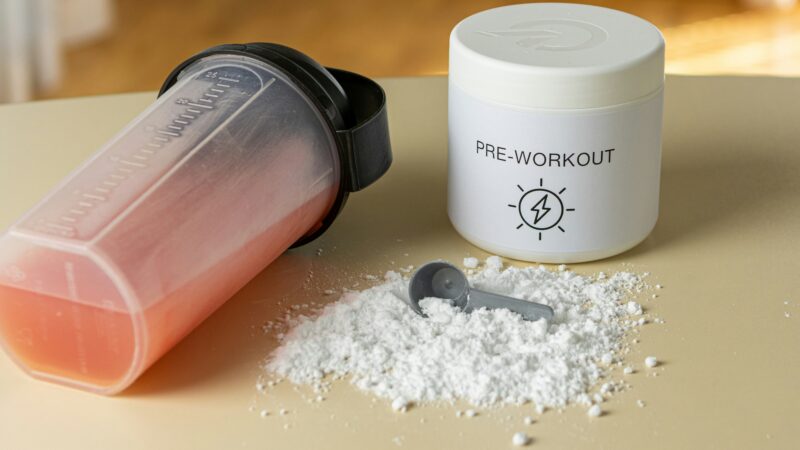
Picture this scenario. You just crushed a brutal, high-volume leg day. Your CNS is completely fried, your quads are shaking, and you can barely unrack the plates. But instead of catching your breath and letting your heart rate drop, you’re practically sprinting to the locker room. Why? Because you’ve got exactly 30 minutes to chug a lukewarm, clumpy whey shake before your body goes catabolic and eats all your hard-earned muscle. Sounds familiar?
If you’re tired of treating your post-workout nutrition like a ticking time bomb, you need the anabolic window myth explained. For decades, gym-goers have been held hostage by the idea that missing this magical 30-minute timeframe means leaving all your gains on the table.
Let’s drop the outdated bro-science and look at the actual physiology of building muscle. It’s time to figure out exactly how to fuel your body without acting like a maniac at the smoothie bar the second you hit a new PR.
The Origin Story: Why We All Believed It
Back in the golden era of bodybuilding magazines, the narrative was simple but terrifying. The magazines told us that lifting heavy weights left our muscle fibers completely depleted, acting like dry, desperate sponges. If you didn’t soak them in fast-digesting protein and simple carbs immediately, you were doomed.
The logic seemed to make sense on paper. You break down muscle in the gym, so you need to build it back up instantly. Supplement companies leaned into this hard. After all, what’s the best way to sell millions of tubs of highly processed whey protein powder? Tell 18-to-35-year-old guys that real food digests too slowly and they absolutely need a liquid supplement immediately after their last set.
We were taught that Muscle Protein Breakdown (MPB) would wildly outpace Muscle Protein Synthesis (MPS) the moment we walked out of the gym doors. It created a culture of paranoia where forgetting your shaker bottle felt like a legitimate training disaster.
The Anabolic Window Myth Explained: Science vs. Bro-Science
Enter modern sports science. Over the last decade, researchers have completely dismantled the idea of a hyper-narrow timeframe for nutrient absorption. Getting the anabolic window myth explained really comes down to understanding how long your muscles stay primed for growth after mechanical tension is applied.
The truth? Your muscles remain heavily sensitized to protein for roughly 24 to 48 hours after a tough training session. That means you are practically living inside the “window” the entire next day.
Think about a heavy 4-day upper/lower split. If you blast your chest and back on Monday afternoon, your body is still using the protein from your Tuesday morning breakfast to repair that tissue. The concept of an instant shut-off valve at the 30-minute mark is a complete biological fabrication.
Your Digestive System Doesn’t Own a Stopwatch
Another massive flaw in the 30-minute rule is ignoring how human digestion actually works. When you eat protein, it doesn’t instantly teleport into your biceps. Digestion takes hours.
Even fast-acting whey protein isolates take about 60 to 90 minutes to fully saturate your bloodstream with amino acids. So, if you chug a shake at minute 29 post-workout, those nutrients aren’t even hitting your damaged muscle tissue until an hour later anyway.
Furthermore, when you’re lifting heavy, your sympathetic nervous system is highly elevated. Your body shifts blood away from your stomach and pushes it into your working muscles to maintain performance. Forcing 50 grams of liquid protein into your gut while your body is in “fight or flight” mode usually just results in bloating, gas, and poor absorption.
The True Hierarchy of Muscle Growth
If timing isn’t the holy grail, what actually builds dense, thick muscle? It all comes down to the hierarchy of your daily nutrition. If you aren’t nailing the basics, stressing over the exact minute you consume a shake is like worrying about the paint job on a car with no engine.
- Total Daily Protein: This dictates 80% of your muscle-building success. You need to hit roughly 0.8 to 1 gram of protein per pound of body weight daily. If your macros are dialed in by the time your head hits the pillow, you’re gonna grow.
- The Leucine Threshold: To maximize MPS, you want to trigger it multiple times a day. You do this by hitting the leucine threshold (about 2.5 to 3 grams of the amino acid leucine) per meal. A solid serving of chicken, Greek yogurt, beef, or eggs easily covers this.
- Caloric Surplus: If you want to pack on size, you need to be eating more calories than you burn. You can’t out-time a calorie deficit.
If you’re hitting 180g of high-quality protein by the end of the day, it fundamentally does not matter if you got 40g of it right after your final set of heavy squats, or two hours later sitting at your dining room table.
When Nutrient Timing Actually Matters
Now, getting the anabolic window myth explained doesn’t mean nutrient timing is entirely useless. Context is everything. There are a few specific scenarios where getting nutrients in fast is actually a smart, strategic move.
Fasted AM Training
If you’re the kind of psycho who hits the iron at 5:00 AM on a completely empty stomach, timing suddenly matters a whole lot more. When you lift fasted, you have no circulating amino acids in your bloodstream from previous meals. Your muscle breakdown rates are naturally higher.
In this specific scenario, slamming a high-quality whey shake right after your workout is optimal to quickly shift your body from a catabolic state back into an anabolic one. (Note: If you’re dealing with chronic joint pain or a potential tear while lifting fasted, don’t try to fix it with a shake—go consult a licensed physical therapist.)
Two-a-Days and Elite Athletics
If you’re running a brutal program where you are training the same muscle group, or doing heavy conditioning within the same 24-hour period, rapid glycogen replenishment is crucial. Downing simple carbs and protein immediately helps you recover fast enough for session number two.
But for a standard natural lifter hitting a well-programmed Upper/Lower split and resting a day or two before hitting those muscles again? You’ve got plenty of time. Relax.
Pro-Tip: The “Symmetrical” Nutrition Protocol
Stop obsessing over the post-workout rush and look at the bigger picture. Your pre-workout meal is arguably far more important than your post-workout shake.
If you eat a solid meal containing protein and complex carbs 1.5 to 2 hours before lifting, that food is still actively digesting while you train. By the time you finish your last set of heavy deadlifts, those exact amino acids from your pre-workout meal are peaking in your bloodstream, ready to start the repair process immediately.
Try this realistic, no-stress protocol:
- Pre-Workout (90-120 mins prior): 30-40g of whole-food protein (like chicken breast) + 50g of complex carbs (like oats or rice). This fuels the session and provides lasting aminos.
- Intra-Workout: Stick to water and electrolytes. Unless you’re training for over two hours, intra-workout BCAA/EAA powders are mostly just expensive flavored water for natural lifters.
- Post-Workout (Within 2-3 hours): Go home, take a shower, let your nervous system calm down, and eat a massive plate of real food. Steak and potatoes, fish and rice. Hit another 40g of protein and you’re golden.
The Final Rep
The days of panic-chugging whey in the locker room are officially over. Understanding the truth behind this concept frees you up to train with intensity, drive home in peace, and eat a satisfying, massive meal without watching the clock.
Focus on crushing your heavy compound lifts with a full range of motion (ROM), steadily applying progressive overload, and hitting your daily macronutrient targets. Muscle growth is a slow, methodical, 24/7 process. Drop the shaker bottle stress, eat big,