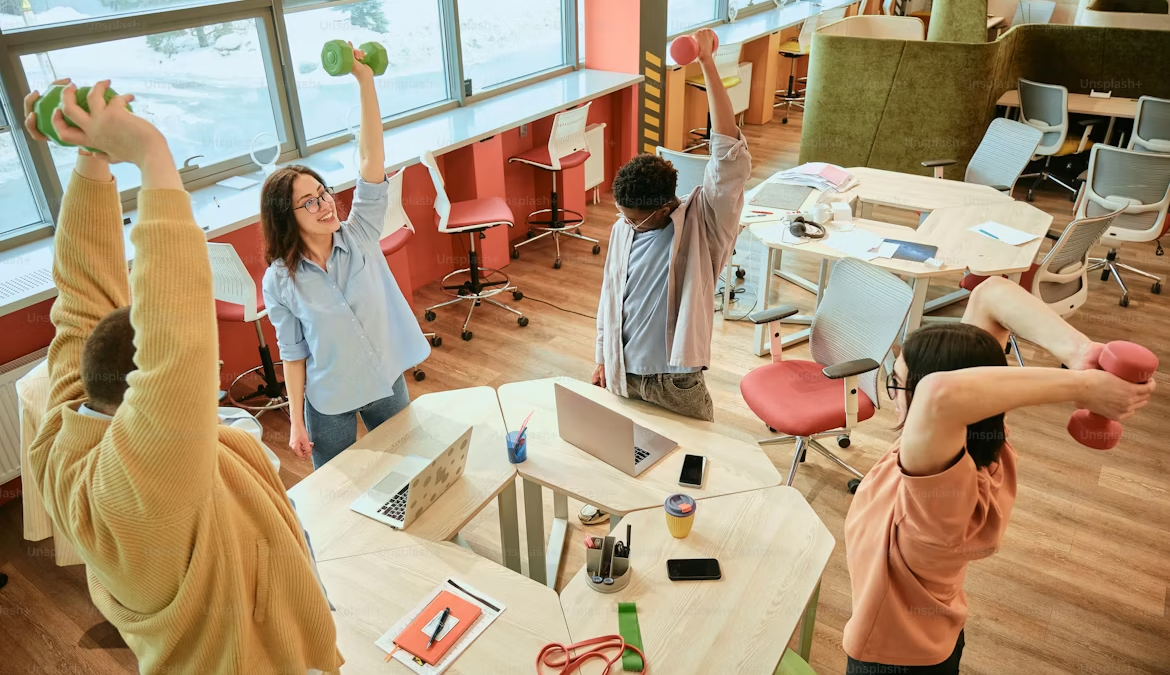
Look, we’ve all been there. You spend eight to ten hours a day slumped over a keyboard, crushing spreadsheets, and chugging cold coffee. Your posture looks like a question mark, your lower back feels like rusty hinges, and your hip flexors are tighter than a guitar string. Then, Friday night hits, you get a burst of motivation, and you decide you’re gonna walk into the gym on Monday and smash a brutal chest and arms session like you’re still twenty and living in a dorm.
Slow down, boss. If you go from zero to one hundred without a strategy, you aren’t getting a PR; you’re getting an appointment with a physical therapist. Slumping in an office chair wrecks your mobility and sleeps your glutes. Dropping straight into heavy squats or max-effort bench presses on day one is a recipe for disaster. To build real muscle and stamina without tearing something, you need a structured, safe gym transition for desk workers that wakes up your central nervous system (CNS) and preps your joints for the heavy iron.
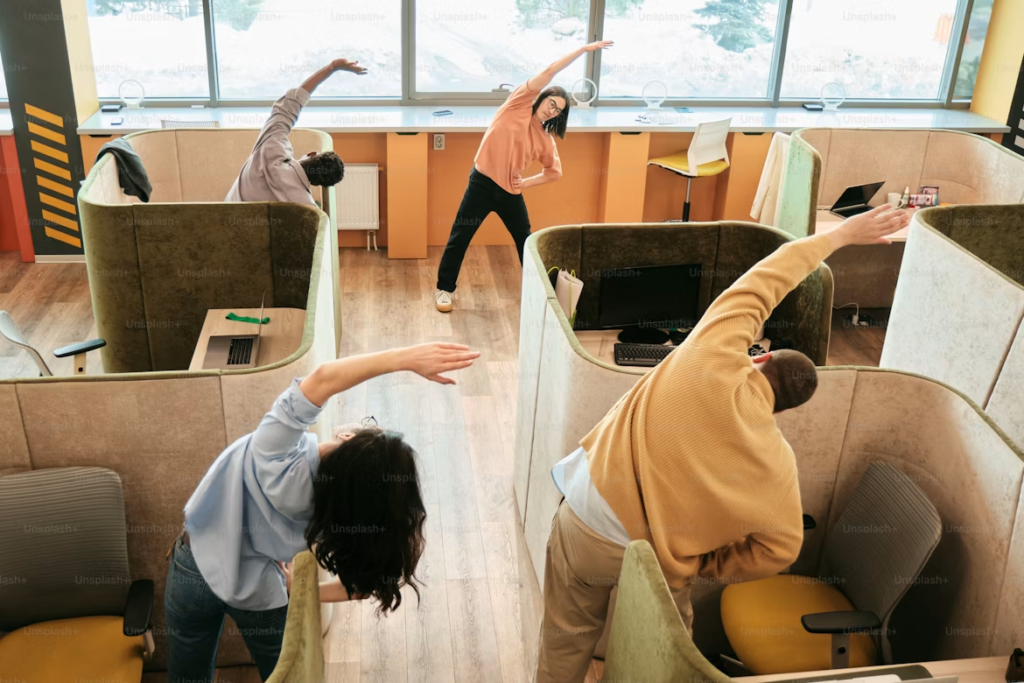
Phase 1: Weeks 1 & 2 – Waking Up the Dead Zones
The first two weeks aren’t about hunting for a massive pump or hitting failure. We need to undo the damage of the “desk-worker posture”—rounded shoulders, anterior pelvic tilt, and dormant glutes. Your main goal here is establishing movement quality, increasing blood flow, and conditioning your connective tissue. If you feel like you aren’t pushing hard enough, good. That means you’re doing it right.
The Anatomy of a Desk Worker’s Joints
When you sit all day, your hip flexors shorten, pulling your pelvis forward. This turns off your glutes completely (glute amnesia is real, man). At the same time, your upper back relaxes into a slouch, causing your shoulders to roll forward. If you try to bench press with rolled-forward shoulders, your rotator cuffs are gonna take a beating. That’s why a smart, safe gym transition for desk workers prioritizes posterior chain activation and thoracic mobility over raw weight.
The Week 1-2 Ready-To-Roll Routine
You’ll hit the gym three days a week, leaving a full rest day between sessions. Think Monday, Wednesday, and Friday. Keep the intensity around a 6 or 7 on the RPE scale (Rate of Perceived Exertion). You should leave every session feeling energized, not absolutely destroyed.
- Goblet Squats: 3 sets x 10-12 reps (Focus on keeping the chest up and driving the knees out to open up the hips).
- Lat Pulldowns or Assisted Pull-ups: 3 sets x 12 reps (Depress your scapula first; don’t just pull with your biceps).
- Dumbbell Romanian Deadlifts (RDLs): 3 sets x 10 reps (Push your hips back like you’re trying to close a car door with your butt).
- Incline Dumbbell Press: 3 sets x 10 reps (Slight incline to save your shoulders from the harsh tracking of a flat barbell).
- Face Pulls: 4 sets x 15 reps (The ultimate antidote to desk slouch. Hold the squeeze for one second at the back).
Phase 2: Weeks 3 & 4 – Loading the Pattern
Now that your joints remember how to move and your glutes are actually firing, it’s time to step things up. We are going to slightly increase the volume and start introducing foundational compound movements. We’re still keeping standard barbells to a minimum to ensure your stabilizer muscles can keep up with the load. This is where the safe gym transition for desk workers begins to look like a traditional, high-yield hypertrophy split.
Don’t get greedy here. Keep your Reps in Reserve (RIR) around 2-3. That means when you finish a set, you could have realistically ground out two or three more clean reps if someone put a gun to your head. This protects your nervous system and prevents excessive DOMS that makes sitting back down at your desk a painful chore.
The Week 3-4 Progression Protocol
We are bumping up the frequency to a 4-day upper/lower split. This distributes the weekly volume perfectly so you don’t overload any specific joint setup on a single day. Shoot for Monday/Tuesday and Thursday/Friday, keeping your weekends completely free for recovery.
Upper Body Day (Monday & Thursday)
- Seated Cable Rows: 3 sets x 8-10 reps (Squeeze your shoulder blades together like you’re trying to pinch a dollar bill between them).
- Flat Dumbbell Bench Press: 3 sets x 8 reps (Keep your elbows tucked at roughly a 45-degree angle; do not flare them out to 90 degrees).
- Overhead Dumbbell Press (Seated): 3 sets x 10 reps (Set the bench to a high incline around 75-80 degrees to protect the lower back).
- Hammer Curls superset with Cable Pushdowns: 3 sets x 12 reps each (Getting some direct arm work to strengthen the elbows).
Lower Body Day (Tuesday & Friday)
- Leg Press: 3 sets x 10 reps (Keep your lower back flat against the pad. Do not let your butt wink or lift off the seat at the bottom).
- Lying Leg Curls: 3 sets x 12 reps (Crucial for hamstring health and balancing out the quad dominance caused by prolonged sitting).
- Bulgarian Split Squats: 2 sets x 8 reps per leg (Yeah, they suck, but they fix unilateral imbalances and stretch out tight hip flexors like nothing else).
- Pallof Presses: 3 sets x 12 reps per side (An anti-rotation core movement that builds an ironclad midsection to support your spine at your desk).
Coach’s Note: If you feel any sharp, shooting joint pain during these movements—especially in the lower back, knees, or shoulders—stop immediately. Mind the difference between a deep muscular burn and structural joint stress. If an old injury flares up, skip the corporate heroics and consult a qualified physical therapist to check your lifting mechanics.
Pro-Tips for Corporate Lifters
Executing a safe gym transition for desk workers involves more than just what you do inside the weight room. You have to manage the other 23 hours of the day if you want your gym sessions to actually yield results.
First, stop static stretching your cold muscles before your workout. It temporarily weakens the muscle fibers. Instead, spend five minutes doing dynamic movements like arm circles, bodyweight lunges, and cat-cow stretches. Save the static stretches for after your session or right before bed to kickstart your parasympathetic nervous system for better sleep.
Second, fix your hydration. Sitting in an air-conditioned office dehydrates you faster than you think. If you’re dehydrated, your strength drops, your joints lose their lubrication, and your focus goes down the drain. Keep a gallon jug or a large flask at your desk and finish it before your shift ends.
The Game Plan Tracker
To keep things crystal clear, use this quick reference table to track your parameters over the next month. Stick to the script, track your weights, and focus on form over ego.
| Phase | Weeks | Frequency | Target RPE | Primary Focus |
|---|---|---|---|---|
| 1: Activation | 1 & 2 | 3 Days / Week | 6 – 7 (3-4 RIR) | Mobility, Posture, Tissue Conditioning |
| 2: Loading | 3 & 4 | 4 Days / Week | 7 – 8 (2-3 RIR) | Hypertrophy, Structural Balance, Volume Expansion |
Wrapping It Up
Look, you didn’t get out of shape in a single day, so don’t expect to build a legendary physique in a single week. Going from a sedentary desk job to a highly active lifestyle requires a bit of patience and a lot of strategy. By following this 4-week ramp-up block, you’re building a bulletproof foundation that will allow you to train hard, heavy, and pain-free for years to come. Pack your gym bag, prep your meals, and let’s get to work.