Let’s get real for a second. You smashed your upper/lower split this week. You finally blew past that 200 lb (90kg) bench press plateau you’ve been stuck on for months. You feel like an absolute beast. But now it’s your scheduled rest day, and you can barely walk down the stairs because the DOMS from yesterday’s heavy squats are vicious.
Most guys handle this entirely wrong. They crash on the couch for ten hours straight, fire up a marathon session of Valorant, and barely move except to answer the door for the Domino’s delivery guy. If you want to keep growing and hit your next 1RM PR, you need a rock-solid protocol for active recovery for lifters.
Doing absolutely nothing makes you stiffer, limits blood flow to damaged tissues, and delays the repair process. On the flip side, going too hard on a rest day ruins your ability to recover. You have to find that sweet spot. Let’s break down exactly how to navigate your off days so you bounce back bigger and stronger.
Why Passive Rest is Killing Your Gains
When you lift heavy, you create micro-tears in the muscle fibers and accumulate metabolic waste products in the tissue. Your body needs nutrients, oxygen, and hydration delivered to those localized areas to patch things up. If you just sit in a gaming chair all day, your heart rate stays near baseline. Blood flow stagnates, and those muscles just lock up.
This is where the magic of active recovery for lifters comes into play. By engaging in low-intensity, low-impact movement, you actively pump blood into the muscles. This acts like a physiological flush, bringing in the good stuff (amino acids, oxygen) and clearing out the bad stuff (lactic acid pooling and cellular waste). The result? Drastically reduced DOMS and a faster turnaround time for your next heavy session.
(Disclaimer: I’m a strength coach, not a doctor. If you are experiencing sharp, shooting joint pain and not just standard muscle DOMS, go consult a physical therapist before trying to push through an injury.)
Active Recovery for Lifters vs. Junk Volume
The biggest mistake intermediate lifters make is confusing active recovery with “light lifting.” You head to the gym on your rest day just to do some light bicep curls or a few sets of lateral raises. Before you know it, your ego takes over. You start chasing a pump, pushing sets close to failure, and suddenly you’ve accumulated junk volume.
Junk volume doesn’t stimulate new hypertrophy, but it absolutely taps into your recovery reserves. Your central nervous system (CNS) doesn’t care that the weight was lighter; it only registers that you forced it to fire under fatigue. True active recovery should be entirely restorative. It should feel incredibly easy. If you are breaking a heavy sweat or feeling localized muscle burn, you are going too hard and sabotaging tomorrow’s workout.
Leave your ego at the door. You aren’t building muscle today; you are setting the stage to build muscle tomorrow. If you can’t hold a normal conversation while doing your recovery work, scale it back immediately.
The 3 Elite Modalities for Rest Day Recovery
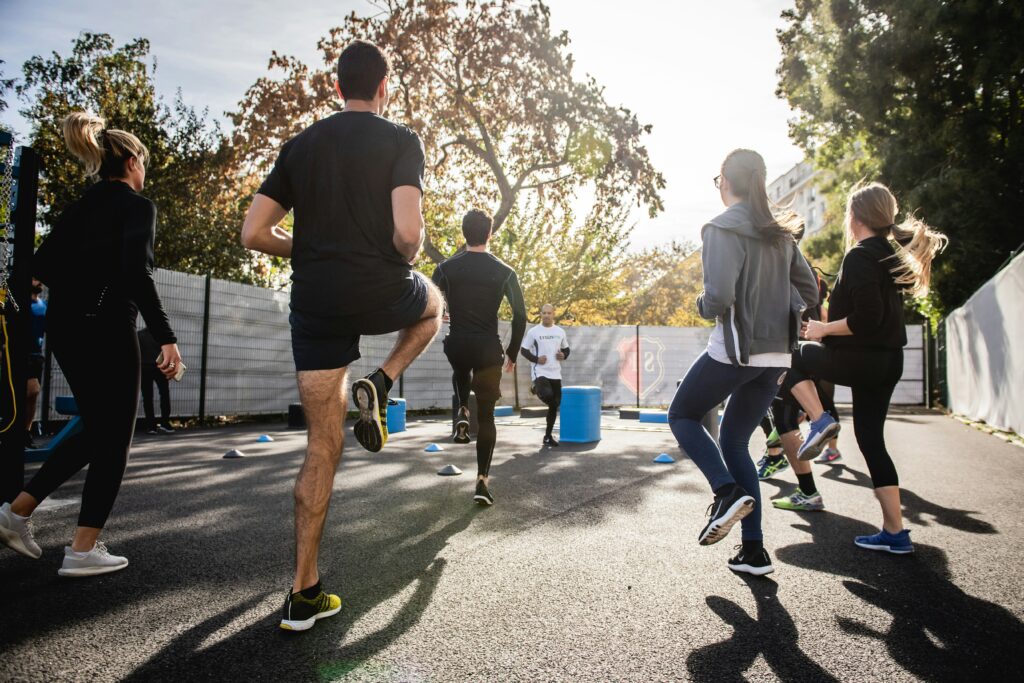
You don’t need a massive menu of exercises for an off day. You just need a few reliable tools to get the blood moving without loading the spine or taxing the nervous system. Here are the three best methods you should be using.
1. Sled Pushes and Drags (The Secret Weapon)
If your gym has a turf strip and a sled, you are looking at the holy grail of recovery tools. Sled work is almost entirely concentric. There is zero eccentric loading (the lowering portion of a lift), which is the phase that causes the most muscle damage and DOMS. You get massive blood flow to the quads, hamstrings, and calves without tearing any new fibers.
Load up a light to moderate weight and just keep moving. Do steady, continuous laps for 10 to 15 minutes. It will burn while you do it, but 20 minutes after you finish, your legs will feel brand new. This is hands down my favorite protocol for guys struggling with lower body stiffness.
2. Strict Zone 2 Cardio
We aren’t talking about high-intensity interval training (HIIT). Sprinting on an assault bike will fry your CNS and ruin your leg day. We are talking about strict, boring, steady-state Zone 2 cardio. Think a stationary bike, an incline treadmill walk, or the rowing machine.
The goal is to keep your heart rate between 120 and 140 BPM for about 20 to 30 minutes. This elevates your core temperature, gets the synovial fluid moving in your joints, and flushes the system. As a bonus, building a better aerobic base means you’ll recover faster between heavy sets of squats and deadlifts during your actual training days.
3. Targeted Mobility and Dynamic Stretching
Static stretching cold muscles is a waste of time. Instead, focus on dynamic movements that actively take your joints through their full range of motion (ROM). We want to focus on the areas that get locked down from heavy lifting and sitting at a desk.
- 90/90 Hip Transfers: Unlocks tight hip flexors and improves external rotation for deeper squats.
- Thoracic Spine Extensions: Use a foam roller to open up your mid-back. Essential for maintaining a proud chest during deadlifts.
- Band Pull-Aparts: Pumps blood into the rear delts and rhomboids to bulletproof your shoulders.
Dialing in the Non-Training Variables
You can do all the sled drags in the world, but if your nutrition and sleep are garbage, your recovery will be garbage. A rest day is not an excuse to eat like a child. You still need to hit your protein macros to facilitate muscle protein synthesis. Your body is doing the actual rebuilding on these off days, so you need to supply the raw materials.
Keep your hydration high and prioritize your sleep. If you are serious about your progress, this is also when you need to be disciplined with your supplementation. If you’re taking your AXION Supplements, or whatever trusted brand you rely on, make sure you are dosing them correctly. Don’t fall for under-dosed proprietary blends; look for clinical doses of creatine, L-citrulline, and proper electrolytes to keep the muscle cells hydrated and primed.
Pro-Tip: Use the “RPE 3 Rule” on your rest days. Rate of Perceived Exertion (RPE) measures how hard an activity feels on a scale of 1 to 10. Your entire active recovery session should never exceed an RPE of 3. If it feels like a 4, slow down.
Your Blueprint: A Perfect Active Recovery Protocol
Stop overcomplicating things. If you want a plug-and-play routine you can steal for your next off day, run through this 30-minute circuit:
- 5 Minutes: Foam rolling the quads, lats, and mid-back (avoid the lower spine).
- 10 Minutes: Dynamic mobility (hip openers, leg swings, arm circles).
- 15 Minutes: Zone 2 cardio on the stationary bike (HR locked at 120-130 BPM).
- Hydration: 32oz of water with a pinch of pink Himalayan salt and your daily creatine.
Stop treating your rest days as a write-off. Implement a smart strategy for active recovery for lifters, feed your body the right nutrients, and watch how much faster you blow past your old plateaus when you get back under the bar.