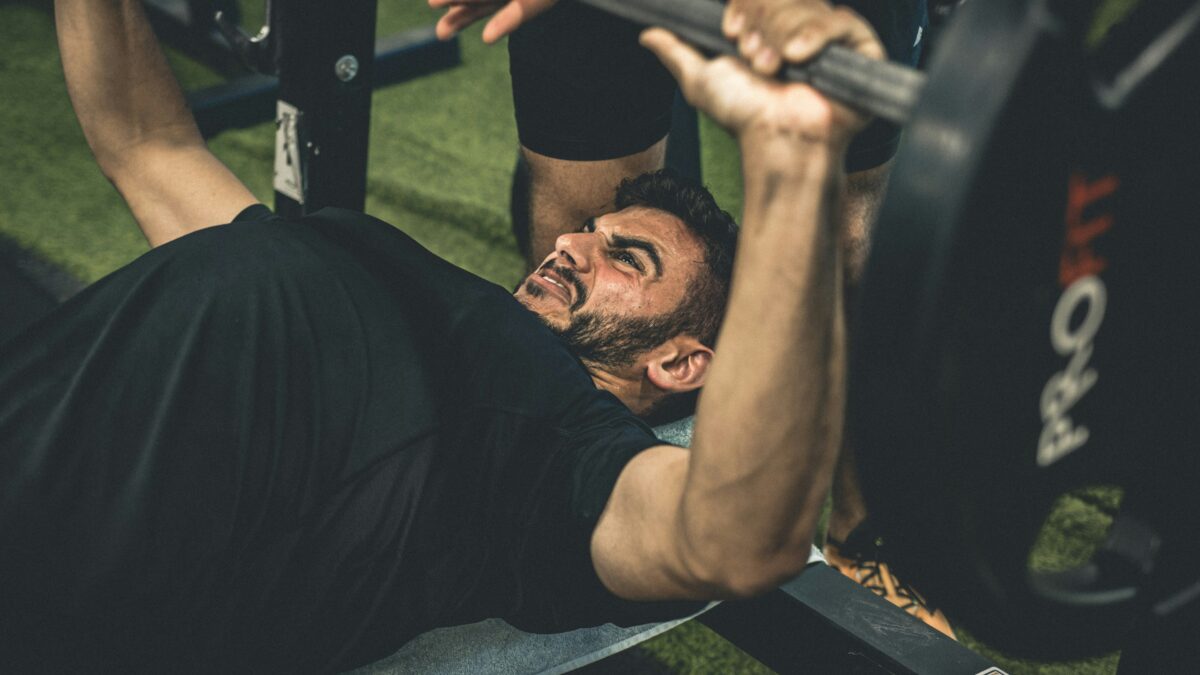
If you’re reading this, you’re probably pissed off. You’ve milked your newbie gains dry, and now, your pressing strength has slammed into a brick wall. Hitting a 200 lb bench press plateau—right around that stubborn 90kg mark—is a frustrating rite of passage for almost every natural lifter. Every time you load up the bar, it feels like it’s welded to your chest.
You’re not weak. You’re just training like a beginner when your body is demanding an intermediate approach. Maxing out every Monday isn’t going to cut it anymore. Your CNS (Central Nervous System) is fried, your triceps are lagging, and your setup is likely leaking force like a busted tire.
To start moving serious weight, we need to completely overhaul how you attack the bench. We’re gonna strip things down, look at your biomechanics, dial in your programming, and start treating your setup like a coiled spring.
Let’s dive into the exact trench-tested strategies you need to smash through this wall and finally put two wheels on each side of the bar.
Why the 200 lb Bench Press Plateau Happens
When you first start lifting, you can just lie flat on a bench, flare your elbows, push hard, and watch your 1RM go up. It’s a beautiful phase. But right around the 90kg mark, the physics of lifting catch up with you. The sheer load requires systemic tension that a sloppy setup simply cannot support.
Most guys get stuck here for three main reasons:
- Zero Leg Drive: You’re treating the bench press like an upper-body isolation movement instead of a full-body lift.
- Tricep Weakness: You can pop the bar off your chest, but it stalls out halfway up because your triceps lack the raw horsepower to lock out the weight.
- Junk Volume: You’re grinding out sets to absolute failure (RPE 10) every single workout, accumulating massive fatigue without actually driving strength adaptations.
If any of that sounds familiar, don’t sweat it. Fixing these issues is how we trigger your next phase of muscle gain and strength development.
3 Proven Ways to Break Your 200 lb Bench Press Plateau
1. Lock In Your Setup and Leg Drive
If your lower body is completely relaxed while you bench, you are leaving an easy 10-15 lbs off your max. Leg drive isn’t about lifting your ass off the bench; it’s about creating a kinetic chain that drives force from the floor, through your hips, into your lats, and up into the bar.
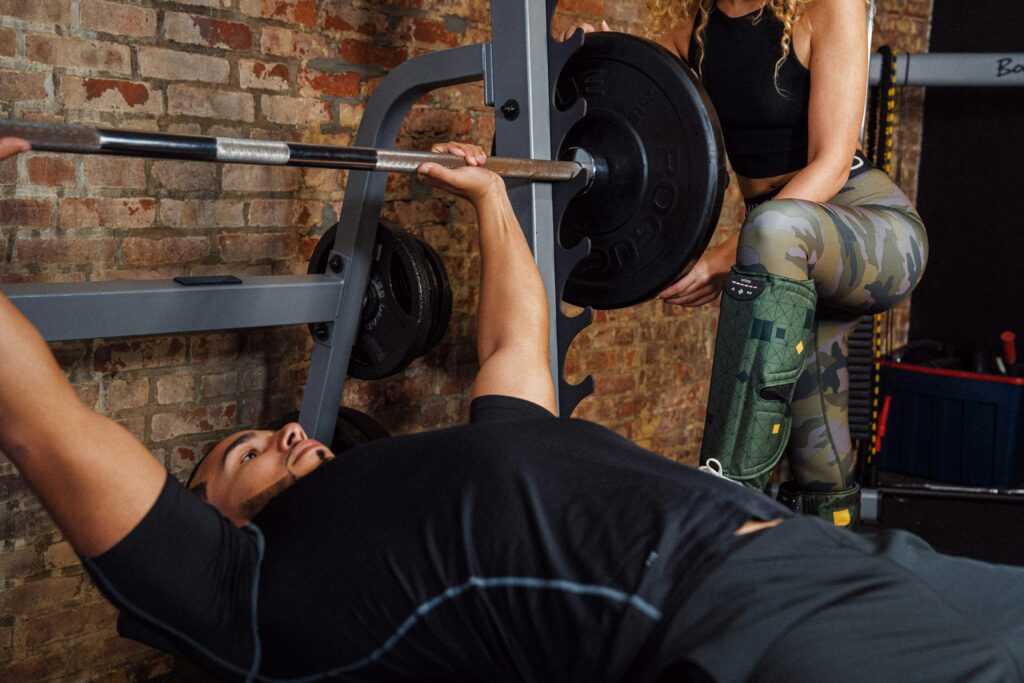
Start by pulling your shoulder blades together and down—think about tucking them into your back pockets. This creates a stable shelf for you to press from and protects your rotator cuffs. Plant your feet firmly on the ground. When the bar touches your chest, drive your toes into the floor as if you’re trying to slide your body up the bench toward the rack.
Disclaimer: If you’re experiencing sharp, shooting shoulder pain during your setup or press, back off and consult a physical therapist before pushing through heavy loads.
2. Blast Your Triceps and Weak Points
Where does the bar stop moving? If it’s right off the chest, you need more pec drive and paused work. But if you’re like 90% of lifters stuck at a 200 lb bench press plateau, the bar stalls midway up. That is a glaring tricep weakness.
Your triceps are the primary movers during the lockout phase. If they are weak, the lift fails. Stop wasting time on endless sets of cable kickbacks and start hammering heavy, compound tricep builders.
- Close-Grip Bench Press: Bring your grip in just inside shoulder width. This forces the triceps to take the brunt of the load.
- JM Presses: A hybrid between a skull crusher and a close-grip bench. It aggressively targets the tricep tendon and builds massive lockout strength.
- Spoto Press: Pause the bar about one inch above your chest for a full two seconds before pressing. This eliminates the stretch reflex and builds brutal raw strength in the transition zone.
Pro-Tip: Swap out your standard flat barbell bench for the Spoto Press for 3 weeks. Keep your reps in the 4-6 range and leave 2 reps in the tank (RIR 2). When you go back to a standard bench, the weight will fly up.
3. Periodize Your Rep Ranges (The 4-Day Upper/Lower Split)
You cannot keep doing 3 sets of 10 and expect your 1RM to climb indefinitely. You need to expose your CNS to heavier loads while still accumulating enough volume for hypertrophy. This is where a proper 4-day upper/lower split shines.
Set up two upper body days per week. Make one day your Heavy Strength Day and the other your Volume/Hypertrophy Day.
- Upper Day 1 (Strength): Flat Barbell Bench Press. Work up to 3-4 heavy sets of 3-5 reps. Rest 3-5 minutes between sets. Do not go to failure. Keep it at an RPE 8 (you could definitely grind out two more reps if your life depended on it).
- Upper Day 2 (Volume/Accessories): Dumbbell Bench Press or Close-Grip Bench. Hit 4 sets of 8-12 reps. Rest 90 seconds to 2 minutes. Focus on a deep stretch, full ROM, and chasing the pump.
This undulating periodization prevents CNS burnout while forcing the muscle fibers to grow. You get the heavy neural adaptation on Day 1 and the cellular swelling and muscle gain on Day 2.
Fueling the PR: Nutrition and Supplementation
You can have the best programming in the world, but if you’re eating like a bird and sleeping 5 hours a night, that 200 lb bench press plateau isn’t going anywhere. Pressing heavy weight is incredibly taxing. You need adequate calories to recover.
Make sure you are eating in a slight caloric surplus—aim for 200-300 calories above maintenance. You need roughly 1 gram of protein per pound of body weight to repair the tissue you’re tearing down in the gym.
Let’s talk supplements. A lot of guys stall out because they aren’t managing their intra-workout fatigue. Dialing in your supplement stack with premium, clinically dosed ingredients is critical. Don’t waste your money on under-dosed proprietary blends. You want a high-action formulation.
Make sure you are taking 5g of high-quality Creatine Monohydrate daily to keep your ATP stores topped off for those heavy triples. For your pre-workout, look for clinical doses of L-Citrulline (6-8g) for blood flow and Betaine Anhydrous (2.5g) for power output. When you combine raw material with brutal training, your body has no choice but to grow.
Time to Execute
Breaking a stubborn plateau doesn’t require complex, magical routines. It requires mastering the basics, applying intelligent programming, and eating enough to fuel the work. Respect the weight, tighten up your setup, hammer your triceps, and stop maxing out every single week.
Apply this framework to your next training block. Stick to the 4-day split, track your macros, and trust the process. The next time you slide under the bar, you won’t just be testing your strength—you’ll be loading up two plates and hitting a PR you actually earned. Now go get under the bar.