Finding the right gym workout for a 30 year old lifters is the ultimate game-changer if you want to build serious muscle without waking up sore, stiff, and broken every single morning. Let’s be completely real for a second: your body just doesn’t bounce back the way it did at 21. Back then, you could walk into the weight room cold, slap three plates on the barbell, squat with terrible form, and walk away completely fine. Try that today, and your lower back and knees will be screaming at you before you even finish your first working set.
The truth is, you don’t have to choose between getting jacked and staying pain-free. You just need a routine tailored to your current biology. Training smarter means managing your recovery and picking the right exercises for your framework. Let’s break down exactly how to protect your spine and knees while still hitting your fitness goals.
Disclaimer: I’m a strength coach, not your doctor. If you have chronic, sharp pain or a diagnosed injury, go see a physical therapist before throwing around heavy iron.
Why Your Knees and Lower Back Feel Trashed (And How to Fix It)
Before we talk about programming a solid gym workout for 30 year old beginners, we have to understand the enemy. For most guys in their 30s, the issue isn’t actual joint degeneration—it’s lifestyle. Desk jobs, long commutes, and hours spent sitting turn your glutes off and lock up your hips. When your hips can’t move, your lower back and knees end up taking all the mechanical stress during heavy lifts.
To fix this, we need to shift our focus toward bulletproofing your movement patterns. We do this by implementing three strict training pillars:
- Mobilizing the hips and ankles to take the pressure off the surrounding joints.
- Firing up the posterior chain (hamstrings and glutes) to protect the lumbar spine.
- Modifying exercise selection to maximize muscular tension while minimizing joint stress.
The Warm-Up Routine You Can No Longer Skip
An elite training session doesn’t start at the squat rack; it starts on the mobility mat. Five minutes on a treadmill isn’t going to cut it anymore. You need a dynamic warm-up that actively prepares your nervous system and lubricates your joints for the loaded ROM ahead.
1. 90/90 Hip Switches
Sit on the floor with your knees bent at 90-degree angles, one leg in front of you and one to the side. Without lifting your feet, rotate your knees to the opposite side. This unlocks internal and external hip rotation, which is crucial for deep, pain-free squats.
2. World’s Greatest Stretch
Step forward into a deep lunge, place your opposite hand on the floor, and rotate your trailing arm up toward the ceiling. This opens up your thoracic spine (upper back) and stretches your hip flexors, taking massive pressure off your lower back.
3. Goblet Squat Holds
Grab a light kettlebell or dumbbell, drop into the bottom of a squat, and use your elbows to pry your knees outward. Drop your hips, keep your chest high, and breathe. This primes your ankles and knees to handle a heavy load safely.
Smart Exercise Swaps for Total Joint Longevity
If your current routine is causing constant DOMS in your joints rather than your muscles, it’s time to rethink your exercise selection. You don’t need to completely abandon the classic barbell lifts, but swapping them for high-yield, low-risk alternatives will keep you consistent and injury-free.
Ditch the Standard Barbell Squat for Box Squats or Bulgarian Split Squats
Back squats are great, but they place a massive axial load on your spine. If your core breaks down, your lower back takes the hit. Box squats force you to sit back into your hips, which drastically reduces knee shear. Alternatively, Bulgarian split squats allow you to crush your quads with half the total weight on your back, saving both your spine and your knees.

Swap Conventional Deadlifts for Trap Bar Deadlifts
Pulling conventional from the floor requires incredible hamstring flexibility and hip mobility. If you don’t have it, your lumbar spine will round under load. The trap bar deadlift alters the biomechanics by placing the weight directly inline with your center of gravity. This keeps your torso more upright and transfers the load from your lower back straight into your legs.
Use a Neutral Grip for Upper Body Pressing
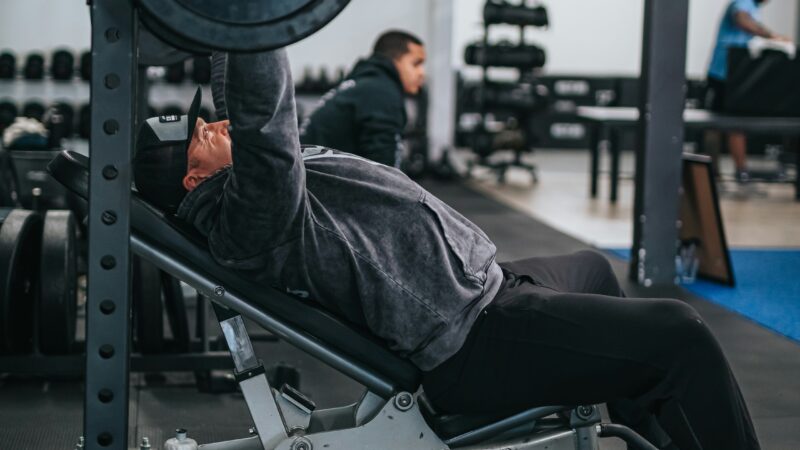
While the topic is lower back and knee safety, shoulder health matters too. Standard bench pressing can beat up your shoulders over time. Using dumbbells with a neutral grip (palms facing each other) keeps your shoulders in a safer position and allows for a more natural pathway during your press.
Sample 4-Day Joint-Friendly Program Structure
Here is a balanced, highly effective split designed to build muscle while keeping your lower back and knees perfectly happy. Make sure you hit your targets without pushing into raw joint pain.
Lower Body Focus (Day 1 & Day 3)
- Trap Bar Deadlift (or Romanian Deadlift): 3 sets x 6-8 reps (Focus on pushing your hips back)
- Goblet Box Squat: 3 sets x 8-10 reps
- Leg Press (Feet high on the sled): 3 sets x 12-15 reps
- Hanging Knee Raises: 3 sets x Max reps (Builds crucial core stability)
Upper Body Focus (Day 2 & Day 4)
- Incline Dumbbell Press (Neutral Grip): 3 sets x 8-10 reps
- Chest-Supported T-Bar Row: 3 sets x 10-12 reps (Saves your lower back from holding a bent-over position)
- Overhead Dumbbell Press (Seated with back support): 3 sets x 10-12 reps
- Lat Pulldowns: 3 sets x 12-15 reps
Pro-Tip: Use the RIR Scale to Monitor Auto-Regulation
Stop training to absolute failure on every single set. Instead, utilize the RIR (Reps in Reserve) scale. For your heavy compound movements, always leave 1 to 2 clean reps in the tank (1-2 RIR). This ensures you stimulate maximum muscle hypertrophy without overloading your central nervous system (CNS) or allowing your form to break down when you’re fatigued.
The Role of Recovery and Smart Programming
The best gym workout for 30 year old lifters won’t do a damn thing if your recovery looks like a dumpster fire. Sleep and nutrition become your primary performance enhancers once you hit this decade. Your body needs quality protein macros to rebuild muscle tissue and a solid 7-8 hours of sleep to manage systemic inflammation.
Track your weights, stay hydrated, and don’t skip your rest days. Progression should be gradual. Focus on progressive overload by adding a rep or a tiny bit of weight to the machine each week, rather than making massive ego jumps that result in a popped joint.
Wrapping It Up
Getting in the best shape of your life after 30 is completely doable, but the reckless tactics of your early twenties belong in the past. By prioritizing hip mobility, picking exercises that fit your structural anatomy, and respecting your recovery windows, you can stack on serious lean mass while feeling completely bulletproof. Leave the ego at the gym door, lock in your technique, and go get