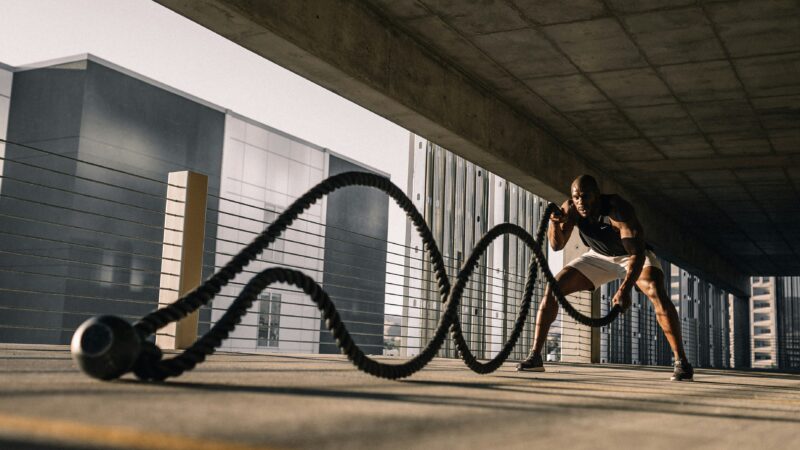
You’ve been training for a couple of years. You’re not a newbie anymore, but you’re also not shredded. You look at yourself in the mirror and think: “I wanna add size, but I also need to drop this gut.” So what do you do — bulk or cut? Here’s the thing nobody wants to tell you: you might not have to pick. Body recomposition for intermediate lifters is a real, science-backed approach — and if your programming and nutrition are dialed in, you can absolutely make it work. Let’s break it down.
What Is Body Recomposition, Actually?
Body recomposition means simultaneously losing body fat and gaining lean muscle mass. On paper, that sounds like it defies basic physiology — after all, building muscle usually requires a caloric surplus, and losing fat requires a deficit. How can both happen at once?
The short answer: your body isn’t a simple calculator. It’s a dynamic system. Under the right conditions — specifically the right training stimulus and protein intake — your body can mobilize stored fat for energy while using dietary protein and resistance training to drive muscle protein synthesis. That’s the sweet spot.
Who Can Actually Pull Off Body Recomposition?
Let’s be straight with you: body recomp is not equally accessible to everyone. Beginners have a massive advantage because they’re highly sensitive to any training stimulus. Advanced lifters near their genetic ceiling? Recomp is brutally slow for them.
Intermediate lifters — generally 1–4 years of consistent, structured training — sit in a genuinely useful middle ground. You’ve got enough training history to handle high-quality volume, but you’re far enough from your ceiling that meaningful muscle gain is still on the table. That’s a solid position to be in.
You’re also a strong candidate for recomp if you:
- Are carrying more than ~15% body fat (males)
- Have been eating at maintenance or in a slight surplus without much structure
- Haven’t run a proper periodized program in 6+ months
- Are returning from a training layoff (muscle memory is a real edge here)
The Nutrition Setup: Maintenance Calories + High Protein
This is where most guys blow it. They either go too aggressive on the cut (which tanks muscle retention) or stay in too big a surplus (which just adds fat). For recomp, the target is simple: eat at or very close to maintenance calories.
Your body will use fat stores to fuel the energy demands of training and recovery. The key lever you’re pulling is protein — and you need to pull it hard.
- Protein target: 0.8–1.0g per pound of bodyweight, minimum. Some research supports going up to 1.2g/lb during a recomp phase, especially if you’re in a slight deficit.
- Carb & fat split: Flexible. Prioritize carbs around training for performance and recovery; don’t fear dietary fat.
- Avoid dramatic swings: If you’re consistently 300–500 calories below maintenance, you’re cutting — not recomping. Stay within ~100–200 calories of your TDEE.
Pro-Tip: Use a TDEE calculator to find your maintenance, then track for 2 weeks without changing anything. Once you have a real baseline, adjust from there — not from some generic formula that’s probably off by 300+ calories.
Training for Body Recomposition for Intermediate Lifters
Your training needs to send a strong enough muscle-building signal to justify keeping — and building — muscle while your body is essentially running on even fuel. That means progressive overload is non-negotiable.
What Your Program Should Look Like
A well-structured 4-day upper/lower split or a push/pull/legs 6-day (if recovery allows) works well here. You want enough frequency to hit each muscle group 2x per week while managing fatigue.
- Rep ranges: Mix it up. Heavy work in the 4–6 rep range builds strength and dense muscle; 8–12 reps drive hypertrophy volume; 15–20 rep sets contribute to metabolic stress. Hit all three across your week.
- RIR (Reps in Reserve): Stay at 1–3 RIR on most working sets. You should feel like you could do more, but not comfortably. If you’re always leaving 5 reps in the tank, you’re not giving your body a reason to adapt.
- Rest times: 2–3 minutes on compound movements (squat, bench, deadlift, rows). 60–90 seconds on isolation work. Don’t turn your strength training into circuit cardio — it’ll crush your performance on the big lifts.
- Cardio: Keep it low-intensity and low-impact — walking, cycling, zone 2 cardio. 2–3 sessions of 20–30 minutes per week is plenty. Aggressive cardio on top of a structured lifting program just inflates your recovery demand.
Don’t Sleep on Sleep and Recovery
Recomp is a slower process than a dedicated bulk or cut. Your CNS and hormonal environment have to support both fat loss and muscle growth simultaneously — and that balancing act is heavily influenced by sleep. 7–9 hours per night isn’t optional here; it’s basically part of the program.
Chronically under-sleeping will spike cortisol, tank testosterone, and flip the metabolic script on you — meaning you’ll start holding fat and losing muscle. Don’t let garbage sleep undo solid training and nutrition.
Managing Expectations: How Fast Will This Actually Work?
Body recomposition for intermediate lifters is real — but it’s slow. We’re not talking about a 12-week dramatic transformation. We’re talking about a process that plays out over months, where the scale might barely move but your body composition is quietly shifting.
Track your progress with:
- Progress photos every 2–4 weeks (same lighting, same time of day)
- Tape measurements around waist, chest, arms, and legs
- Strength numbers in the gym — if you’re getting stronger while staying the same weight, you’re almost certainly recomping
- The scale alone will gaslight you. Use it as one data point, not the verdict
Common Mistakes That Kill Your Recomp
- Under-eating protein: This is the #1 killer. If your protein is low, your body has no building blocks for muscle — period.
- Training without progressive overload: Going through the motions without tracking and beating your logbook is just burning calories, not building muscle.
- Chasing the scale: Weight can fluctuate 3–5 lbs daily based on water, sodium, and carbs. Don’t let a number on the scale convince you your recomp isn’t working.
- Switching plans every 3 weeks: Recomp requires consistency over time. Pick a program, run it for at least 8–12 weeks, and actually assess it before scrapping it.
The Bottom Line
Yeah, you can build muscle and lose fat at the same time — and if you’re an intermediate lifter who’s been spinning your wheels on generic programs, a proper recomp phase might be exactly what you need. It’s not magic, it’s not fast, and it’s not gonna happen without dialing in your protein and training. But it’s absolutely achievable.
Nail your maintenance calories, hit 0.8–1g of protein per pound of bodyweight, train with real progressive overload, and give it time. Trust the process, track the right metrics, and stop letting the scale run your life. The recomp is happening — you just have to be consistent enough to see it through.
Now go train.